


France has always been a bit of a bulwark for industry, but the country is currently embarking on an impressive industrial transformation.
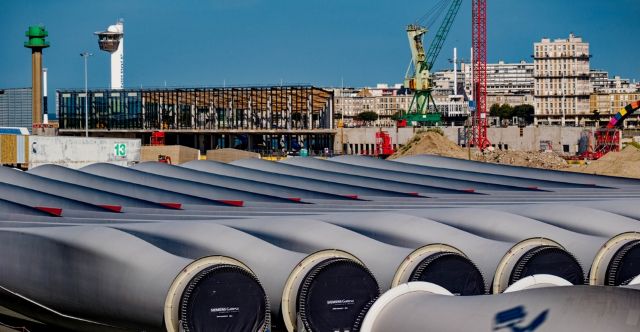
Recent plans to regenerate the port of Dunkirk (pictured), turning it into a hub for low-carbon energy, advanced manufacturing and enhanced logistics, are the latest example of a strategic shift for both the French government and investors.
Backed by billions of euros and with participation from major French tech and manufacturing companies, the project is a clear signal of how France sees its industrial future.
Beyond cards and planes, French manufacturing is looking increasingly robust and increasingly green—setting the stage for a more competitive France, and a more self-sufficient Europe.
Rebuilding confidence in industrial France
While France has avoided the worst of the industrial collapse seen in many advanced economies, it hasn't been unaffected by the rise of cheap manufacturing. Employment has declined and factories have closed over the past several decades, as other countries (namely China) have managed to undercut local manufacturers, and draw away investment. France’s saving grace has been its strength in advanced and precision manufacturing such as the aerospace industry, and the pervading strength of the ‘Made In France’ brand.
Despite this, policymakers and industrial leaders have grown increasingly concerned about not just France's exposure to supply-chain disruption and foreign dominance in critical sectors, but Europe's. Strategic areas like batteries, semiconductors and green technologies have been seen as a growing vulnerability, with other countries able to hold Europe hostage by leveraging their own manufacturing prowess.
Article: Start a Business in France in 8 Steps
This anxiety has been amplified by geopolitical tensions, particularly between the United States and China. The result is that Europe as a whole has been forced to think more strategically about its industrial base, as well as its economic sovereignty. Where outsourcing key production to distant markets was once seen as a strength of globalisation, Europe now risks falling behind without stronger domestic capacity.
Many French industrial zones are now being repurposed with this in mind. Large-scale battery plants are underway in northern France, forming part of a so-called “battery valley” that aims to produce and recycle electric vehicle batteries locally, rather than relying on imports. The focus isn’t restricted to one region, either: plans under national frameworks such as the France 2030 strategy are steering investment into multiple industrial hubs, including Dunkirk, Fos-sur-Mer, and other areas where green energy, logistics and advanced manufacturing can flourish.
Greener, leaner, and more independent
 If sustainability has been broadly abandoned as an area for investment in the United States, it remains a focus in Europe. The reliance of countries such as Germany on natural gas was thrown into start relief when Russia cut off pipelines as a response to sanctions, and highlighted the need for more local energy production. While France has a large amount of nuclear capacity, the country has also focussed on a green hydrogen strategy, seeking to boost domestic electrolysis capacity and reduce imports to zero before 2035.
Green hydrogen is just one part of a broader vision for green investments. Renewable energy has also been a growing focus, with France (very slowly) beginning to overcome its opposition to wind power. Steel production is also being steadily decarbonised, with major firms investing in technologies like direct reduction iron and electric arc furnaces.
This is being supported by the French government, helping companies to maintain production capacity while cutting emissions. All of this contributes to reducing Europe’s broader reliance on fossil fuels and imported components. (For more information on green startups, see our article How to start a cleantech business in France.)
These industrial ambitions are increasingly relying on international cooperation. The Dunkirk regeneration project’s potential ferry link to Scotland is one example, but France and Germany have also recently proposed new formats for cooperation among the EU’s largest economies to boost competitiveness, address reliance on critical raw materials, and improve energy security.
What projects like Dunkirk could represent is a shift away from focussing exclusively on local or national interests, and towards representing a part of a wider European network and strategy for green investment. While large economies such as the United States, China or India might be less reluctant to cooperate on certain issues, the smaller nations that comprise Europe may start to share more infrastructure and invest in cross-border partnerships, boosting businesses and creating a more integrated industrial landscape.
Investment and regulatory support
We’ve mentioned the France 2030 strategy which is funnelling public funding into future technologies, but other efforts are also underway to improve the environment for industrial businesses. The French government is working to simplify administrative procedures and develop pre-equipped industrial sites, with the goal of reducing barriers for investors, and speeding up the establishment of new production facilities.
There’s also plenty for French industry to boast about already. France’s industrial landscape benefits from the existence of more than 400 established industrial zones and business parks with ready-made infrastructure, energy, logistics and digital connectivity. The government has also sought to trim the time and cost associated with industrial permits, recognising that lengthy approvals can deter investors and slow progress.
All of this dovetails with efforts elsewhere in Europe to rebuild industrial capacity. The European Commission’s Clean Industrial Deal and new state aid frameworks are an attempt to support clean technologies and other strategic industries. All of this is becoming more pressing as key milestones in the Paris Agreement get closer, and countries look for new incentives to maintain their own green investments.
Pressures and pitfalls
Despite these positives, challenges remain. Some traditional segments of French and European industry struggle with high energy costs, regulatory burdens, and competition from cheaper imports. While the energy cost issue may well be solved by some of those same investments, that process is far from immediate, and lower energy costs may take some years to trickle down to businesses, let alone individuals.
Recent reports also show sharp declines in investment in sectors like chemical production, where costs and competition have forced closures and raised concerns about dependency on non-European producers. Meeting climate targets while staying competitive also adds a layer of complexity. France’s energy transition is highly ambitious, involving additional nuclear capacity alongside renewable generation.
Like everything, though, there’s a careful balance to be struck between the needs of industry for reliable and affordable energy, and what the government deems to be sensible and practical investment on a short to medium time scale. Technologies such as fusion reactors are highly promising, but have already proved difficult to bring to fruition, and could end up being time and money sinks. France is home to Euratom’s ITER fusion facility, but this already looks to be running a decade behind schedule, and well over budget.
France has long been one of Europe’s most resilient economies, and the country looks set to solidify its place as a European leader. By investing in a new industrial base, it should not only continue to attract greater investment, but shore up an area where Europe is currently struggling to compete with other major economies, and provide greater security and protection from supply chain disruption.
The Dunkirk regeneration plan may be a relatively minor cog in this machine, but it is symbolic of a growing industrial strategy. Entrepreneurs and businesses looking to start up or expand in France will find an increasingly supportive regulatory environment, greater funding, and a cohesive plan for providing key technologies and services—all helping to secure Europe’s future as a world leader in production and manufacturing.


